
Industry Authority in Induction Heating

Induction Forging Equipment
& Automated Systems

Precision Heating Solutions for Billets, Bars, Shafts, Bar Ends, and Other Workpieces.

Experience superior thermal processing. Compared to traditional gas furnaces, LJINDUCTION systems offer rapid heating cycles, uniform core temperature, and massive energy savings, ensuring 24/7 high-precision forging.

Rapid Heating Reach forging temp in seconds.
Thermal Uniformity Consistent core-to-surface heat.
Energy Saving Up to 85%+ machine efficiency.
Zero Emission Eco-friendly & scale-free process.
Get Technical Quote
LJINDUCTION Automated Forging System
LJINDUCTION FORGE SERIES
Precision Heating Technology

Specialized Forging Systems by Workpiece Type

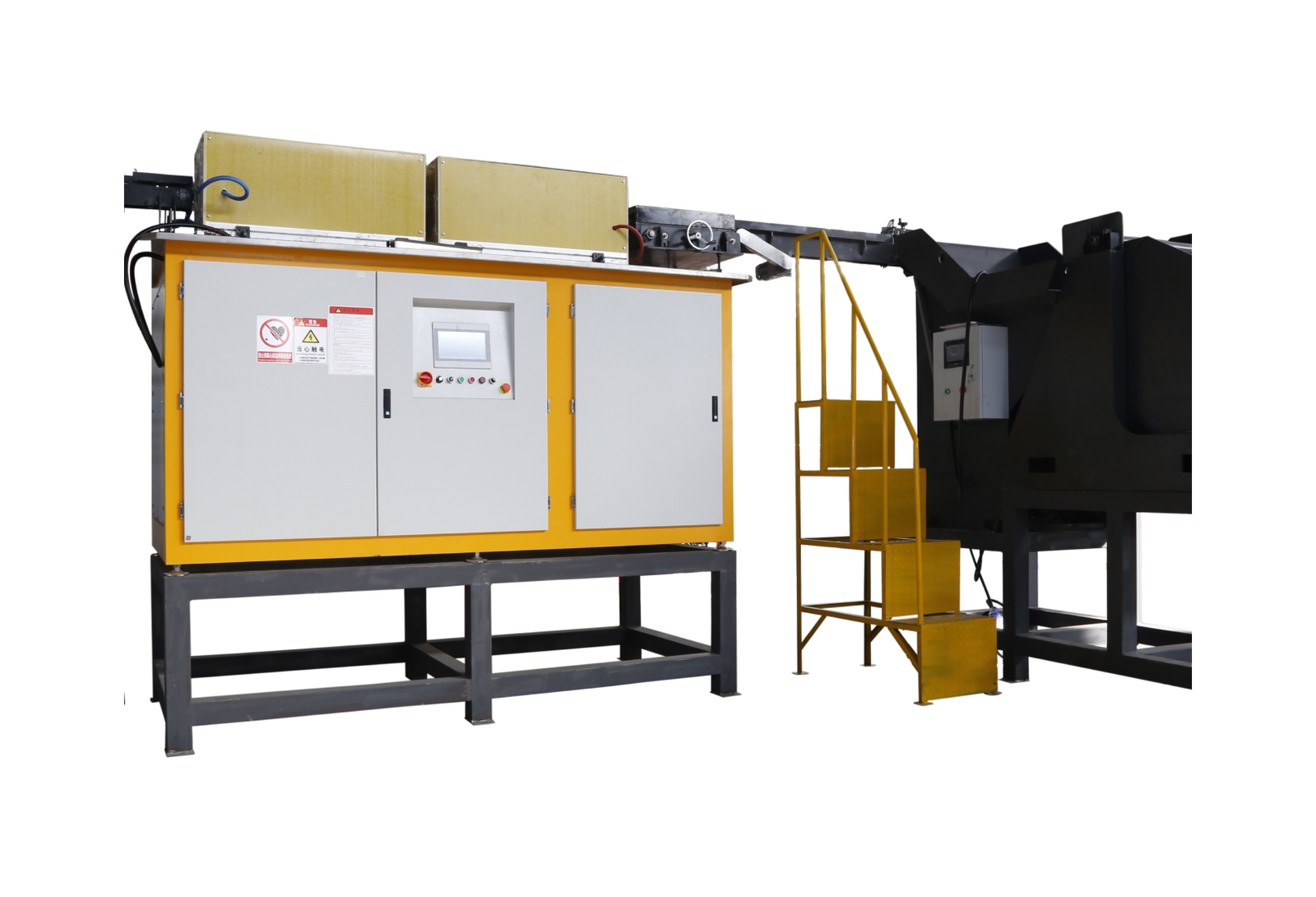
Induction Billet Heating Machine

Induction Billet Heating Machines

FOCUS: Full-length heating for high-volume production.

  • High thermal penetration
  • Automated billet pushing
  • Scalable power output
VIEW MACHINE SPECS
Induction Bar Heating Machine

Induction Bar Heating Machines

FOCUS: Continuous bar feeding for automatic forging presses.

  • PLC synchronization
  • Consistent surface temp
  • Anti-scale processing
VIEW MACHINE SPECS
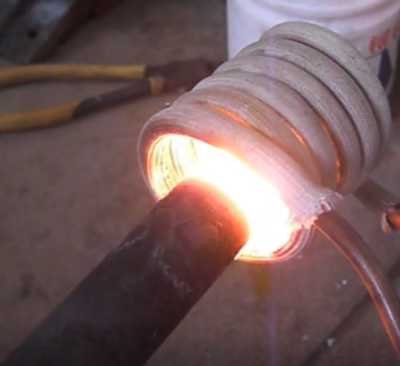
Induction Bar End Heating Machine

Induction Bar End Heating Machines

FOCUS: Partial heating for upsetting and localized forging.

  • Custom coil profiles
  • Localized heat zones
  • Reduced heat distortion
VIEW MACHINE SPECS
Shaft Forging Induction System

Shaft Forging Induction Systems

FOCUS: Specialized handling for long shafts and axle components.

  • Axial rotation support
  • Precise length control
  • Multi-zone temperature
VIEW MACHINE SPECS

Trusted by Industry Leaders

Our induction forging systems are the preferred choice for top-tier automotive and industrial manufacturers worldwide.

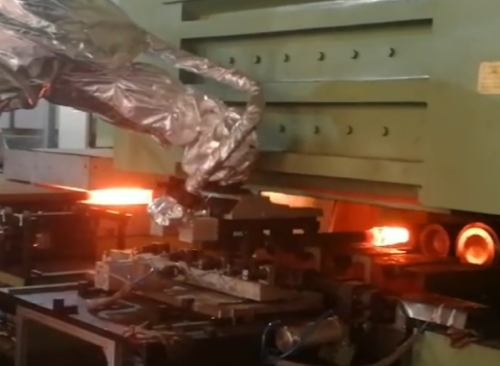
Live Operations: High-Volume Production for Global Partners

01 POWER SIZING & FREQUENCY

LJINDUCTION SYSTEM CALCULATOR
ESTIMATED GENERATOR OUTPUT
0.0
KW
FREQUENCY REFERENCE GUIDE
DIAMETERFREQUENCYREMARK
Φ 10-25 mm20 - 50 kHzSurface Heating
Φ 25-50 mm8 - 20 kHzMedium Forging
Φ 50-100 mm1 - 8 kHzDeep Penetration
Φ 100 mm+0.5 - 1 kHzLarge Billet
* FULL POWER OUTPUT AT RATED FREQUENCY.
Contact Engineer

02 INDUSTRY SPECIFIC SOLUTIONS

01. AUTOMOTIVE FORGING
CHALLENGE
Inconsistent billet temperature leading to microstructural defects in safety-critical parts.
LJINDUCTION SOLUTION
Precision IGBT control providing ±5°C temperature stability and 100% heating traceability.
02. AEROSPACE COMPONENTS
CHALLENGE
Strict requirements for uniform core heating of superalloys and digital data logging for audits.
LJINDUCTION SOLUTION
Integrated MES data interface with multi-zone heating coils for superior thermal uniformity.
03. MINING & ENERGY
CHALLENGE
Massive cross-section workpieces (150mm+) requiring extreme energy density and deep penetration.
LJINDUCTION SOLUTION
High-power resonant inverters with multi-tap frequency matching for maximum core heat soak.

Seamless Integration with Your Production Line

LJINDUCTION forging equipment is engineered as the "Intelligent Core" of your forging cell. We ensure 100% hardware and software compatibility with mechanical presses, hammers, and automation robots.

01. MECHANICAL SYNCHRONIZATION

Advanced Handling Systems

Pneumatic & Hydraulic Billet Pushers
Heavy-duty synchronized feeding systems ensuring precise positioning and consistent Takt Time.
Step-Feeder & Vibratory Bowls
Automated bulk loading designed for 24/7 high-volume production with zero operator fatigue.
Robotic Arm Synchronization
Fully integrated "Handshake" protocols (Ethernet/IP, PROFINET) for Automation-ready cells.
02. DIGITAL ARCHITECTURE

Industry 4.0 Controls

PLC-Base Communication
Standardized interfaces for Siemens, Rockwell, and Mitsubishi for seamless signal exchange.
MES & ERP Connectivity
Real-time data logging of heating profiles (Temp/Power/Time) for 100% quality audits.
Recipe Management
"One-Button Changeover" protocols that minimize Changeover Time during alloy switching.

03. SYSTEM ARCHITECTURE & WORKFLOW

01. INFEED
STEP-FEEDER LOGIC
02. INDUCTION
THERMAL FEEDBACK
03. TRANSFER
ROBOT HANDSHAKE
04. SORTING
TOLERANCE CHECK
LJINDUCTION AUTOMATION CORE
REF: LJ-AUTO-2026 | PROTOCOL: INDUSTRIAL ETHERNET / PROFINET

Real-World Applications & Automation Modules

Technical Case Study

Axle Shaft Induction Forging

The Challenge: Shafts require precise longitudinal temperature gradients to maintain straightness while ensuring the forging end is at the perfect plastic state.

The Solution: Specialized handling and induction coil geometry designed specifically for axle and drive shaft production.

Explore Case Study →

Intelligent Feeding & Handling Engines

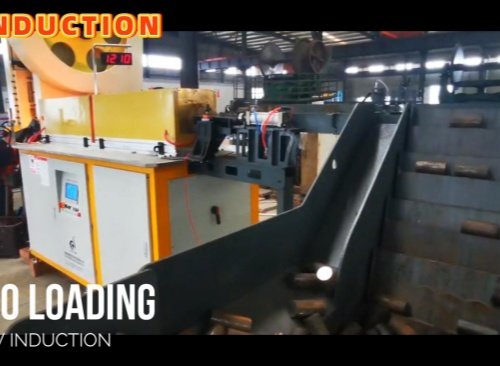
CHAIN CONVEYOR FEEDING

Heavy-duty conveyor designed for moving large bars through the induction coil with consistent Takt time.

[VIEW TECHNICAL SPECS →]
FULL AUTO VIBRATORY BOWL

High-speed, unattended 24/7 operation. The ultimate automation for small fasteners and tool blanks.

[VIEW AUTOMATION DETAIL →]
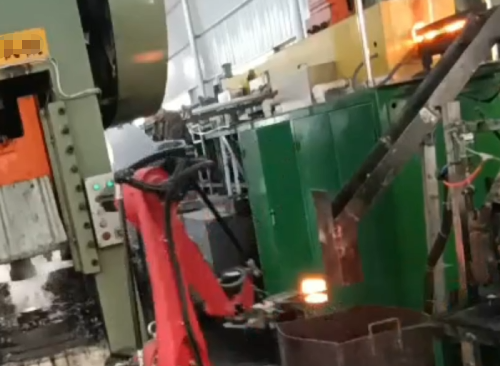
ROBOT-IN FEEDING SYSTEM

Seamless integration with industrial robotic arms for precise workpiece placement and retrieval.

[CUSTOM SOLUTIONS ONLY]
PNEUMATIC PUSHER SYSTEM

A high-reliability pusher for medium-sized billets. Balanced performance for standard forging lines.

[VIEW PUSHER SPECS →]
MANUAL FEEDING OPTIONS

Simple, effective loading for custom jobs or blacksmith applications requiring manual control.

[VIEW MANUAL SOLUTIONS →]
SEMI-AUTO PUSHER FEEDING

Operator-assisted feeding for batch production where flexibility and quick changeover are key.

[CUSTOM CONFIGURATION AVAILABLE]

Quality Control & Smart Sorting

Discharge Screening Function

Automated temperature inspection. Parts falling outside ±10°C tolerance are diverted to protect forging dies.

[LEARN ABOUT DIE PROTECTION →]

Continuous Index Feeding

Eliminates thermal inconsistency. Every part receives identical energy exposure for uniform forging results.

[VIEW SYSTEM LOGIC →]

Total Cost of Ownership: Gas vs. Induction

Comparison MetricGas/Oil FurnaceLJINDUCTION SystemImpact on ROI
Energy Efficiency20% - 30%85% - 95%Lower Electricity Bills
Startup Time2 - 6 Hours (Preheat)Instant On (<5 min)No wasted idle energy
Scale Loss (Waste)2% - 5% Material Loss<0.5% Material Loss3% more finished parts/ton
Maintenance EffortHigh (Refractory/Fuel lines)Low (Solid-state reliability)Reduced Labor Costs

Maintenance Roadmap for 99.9% Uptime

01. DAILY / PER-SHIFT
  • Water Flow & Pressure: Ensure IGBT cooling circuit is clear.
  • Coil Visual Audit: Check for copper exposure or arcing.
02. WEEKLY AUDITS
  • Conductivity Test: Keep cooling water < 200 µS/cm.
  • Electrical Check: Tighten HF vibration-prone connections.
03. MONTHLY TUNING
  • Filter Cleaning: Maintain dust-free power supply environment.
  • Recipe Calibration: Re-verify pyrometer for temp accuracy.

Master the Induction Forging Process: Expert Q&A

How do I choose the right power (kW) and frequency (Hz) for my specific forging application? +

The choice depends on your billet diameter and required throughput (parts per hour):

  • Frequency: Determines heating depth. Large billets (>100mm) require lower frequencies (1-4kHz), while small bars (<20mm) need high frequencies (30-80kHz).
  • Power (kW): Determined by mass and target temperature. Heating 1 ton of steel to 1200°C per hour requires approximately 300kW-400kW.
How does induction forging reduce operational costs compared to traditional gas furnaces? +

Induction typically offers a payback period of 12-18 months:

  • Efficiency: 85-90% efficiency vs. 20-30% for gas.
  • Material Savings: Reduces "scale loss" to under 0.5% (vs. 3% in gas), saving tons of raw material annually.
  • Instant-On: No preheating required, saving hours of idle fuel and labor costs.
How do I avoid "Cold Core" or surface melting issues during rapid induction heating? +

We solve this through Multistage Recipe Management:

Our systems use a high-power ramp to bring the skin to temperature, followed by a lower-power "soaking phase". This ensures a uniform temperature of ±10°C across the entire cross-section. Optical pyrometers provide real-time feedback to prevent overheating.

Can one induction coil handle different part sizes, and how fast is the changeover? +
  • Coil Range: One coil handles a small range, but peak efficiency requires a coil matched to the part geometry.
  • 15-Minute Changeover: Our "Plug-and-Heat" interface allows an operator to swap coils and recall recipes in under 15 minutes.
What are the cooling water requirements, and can the system be integrated into my existing automated line? +
  • Water Quality: Requires a closed-loop chiller with conductivity < 200 µS/cm to prevent internal scaling.
  • Integration: Industry 4.0 ready. We provide standardized PLC interfaces (Profinet/Ethernet) to synchronize with robotic loaders and presses.

Ready to Transform Your Forging Productivity?

Don't leave your production efficiency to chance. Whether you are upgrading a legacy gas furnace or designing a high-speed automated line, our engineers are here to bridge the gap between complex physics and industrial reality. Join leaders like BYD and GWM in adopting the next generation of induction technology.

Verified ISO 9001 Manufacturer
Free Engineering Consultation
Global On-site Support
LJINDUCTION Chief Engineer
"Our goal is to provide more than just a machine; we deliver a synchronized, energy-efficient production workflow."
— Chief Technical Officer, LJINDUCTION

Start Your Consultation

Get My Custom Technical Proposal → Calculate Your Potential ROI

Not ready to quote yet?

PDF Download: 2026 Induction Forging Integration Guide

* 54 pages of technical layouts, ROI formulas, and automation protocols.

Haven't Found the ideal induction heating machine?

We have installed more than 20000+ cases in 30 Years+