
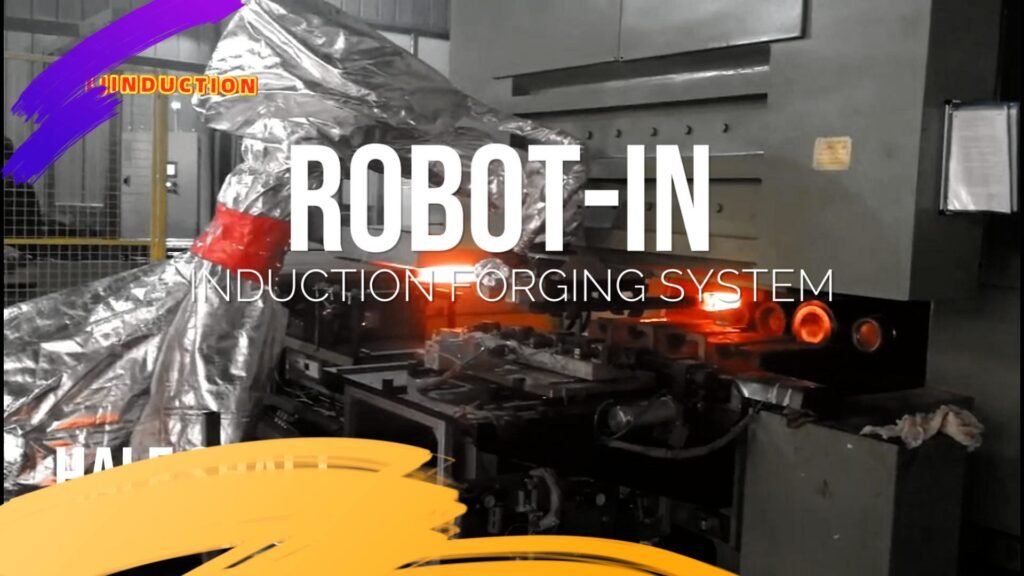
Application: Forging
Industry: Automotive Manufacturing & Heavy Industry Automation.
Equipment: LJ-FOU series
Robotic Induction Forging System (Medium-Frequency Induction Heating Power Supply, Industrial Robotic Arm, Specialized Induction Coils)
Application Objectives:
Axle shaft induction forging application was the primary focus for an automotive parts manufacturer, and they are seeking to switch from manual, inconsistent forging methods to fully automated ones. The primary goal of the project was to integrate precision induction heating with robotic handling for axle shaft forging. Our goal was to eliminate manual labour and improve factory safety by uniformly heating the shaft, reducing cycle times, and ensuring a seamless transition from the heating coil to the pressing machine.
Materials: steel
Process:
Axle shaft induction forging application utilizes a precise induction heating cycle to reach the proper forging temperature for the axle shaft. All processes are fully synchronized.
Induction Heating: Axle shaft induction forging application ensures the shaft is heated rapidly to a precise 1100°C temperature within a customized coil to ensure a uniform temperature profile.
Robotic Transfer: Axle shaft induction forging application features an industrial robotic arm that precisely pinches the heated shaft from the induction unit.
Pressing Integration: Axle shaft induction forging application achieves a total heat cycle and transfer time of only 30 seconds; the robot maneuvers the shaft directly into the pressing machine for final shaping before any significant heat loss occurs.
Results and Conclusions:
Axle shaft induction forging application, as shown in the video, is powered by our LJ-FAU Series system to provide a robust solution for axle shaft production. By replacing manual handling with a synchronized robotic system, the client achieved significant improvements in throughput and part consistency. Axle shaft induction forging application utilizing advanced induction technology improved energy efficiency by 60% compared to traditional heating methods. As this project proves, automation reduces operational costs and carbon footprint by optimizing the entire forging production line.
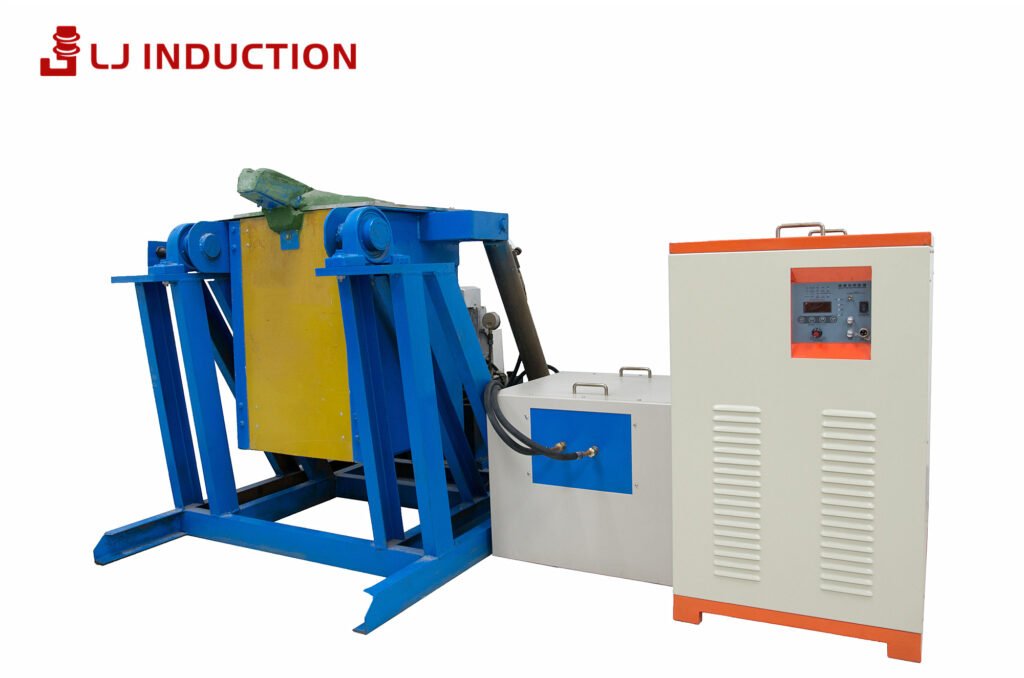
Iron induction melting furnace PLC Conlled, coreless/channels, 1150–1550°C ±5°C control, EPA 2025 ready. Faster melts, lower CO₂.
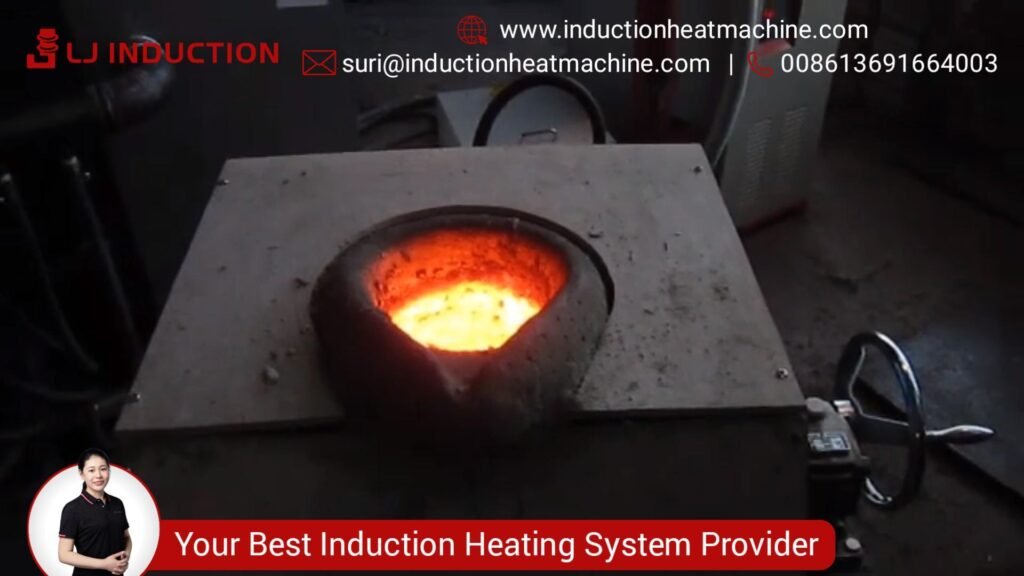
Explore the advantages of using an induction furnace for iron melting, including efficiency and ease of use in this comprehensive guide.