
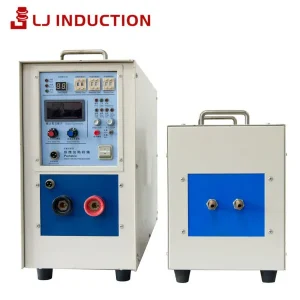
A stationary induction brazing machine is a fixed production system that uses induction heating to braze metal joints with high repeatability. This stationary induction brazing machine is ideal when you need consistent cycle times, stable joint quality, and controlled heat on the braze area. From here on, we’ll also cover an induction brazing system, an induction brazing workstation, and induction brazing automation, plus the role of an induction brazing coil, induction brazing fixtures, and process data logging for quality control.
A stationary induction brazing machine is designed for factory use where every cycle must be predictable and repeatable. In many plants, the same unit can operate as an induction brazing workstation for flexible production, or scale into an induction brazing system that connects to conveyors, indexing tables, or robots. If your goal is fewer rejects and less rework, a properly configured induction brazing workstation often becomes the baseline for production stability.
| Parameter | Specification / Value |
|---|---|
| General | |
| Product Name | Stationary Induction Brazing Machine |
| Model | / |
| Series | LJ |
| Applications | HVAC / Automotive / Aerospace / Electronics / Medical / R&D |
| Process Type | Induction Brazing |
| Material Compatibility | Copper / Brass / Steel / Dissimilar metals (as applicable) |
| Typical Joints | Tubes, fittings, connectors, distributors, heat exchangers |
| Work Mode | Standalone workstation / Inline production |
| Mains Input | |
| Input Voltage | 360–400 VAC/or customized |
| Phases | 3P |
| Line Frequency | 50 / 60 Hz |
| System Efficiency | 99.8% |
| Output & Frequency | |
| Rated Output Power (Continuous) | 10-60kW |
| Peak Power | 10-60kW |
| Frequency Range | 100-400kHz |
| Auto Tuning | Optional |
| Duty Cycle | 100% |
| Output Stability | ±15% |
| Process Performance | |
| Typical Heating Cycle Time | Depends on joint, material, and fixture |
| Temperature Control | Timer / Power control / Pyrometer / Thermocouple |
| Heating Profile | Ramp / Hold / Cool (recipe-based) |
| HAZ Control | Localized heating with minimal thermal impact |
| Oxidation Control Options | Shielding / Inert gas (optional) / Process enclosure (optional) |
| Quick Changeover | Modular fixtures and coil quick-change (optional) |
| Station & Automation | |
| Station Type | Single-station / Multi-station |
| Automation Level | Manual / Semi-automatic / Fully automatic |
| Part Handling | Manual loading / Conveyor / Index table / Robot |
| Throughput Target | Depends |
| Fixturing & Alignment | Positioning method / accuracy |
| Control & Data | |
| Control Mode | Standard Knob Control ;optional HMI / PLC / Recipe control |
| Recipe Memory | 30sets |
| Data Logging | Optional |
| Data Export | USB |
| Traceability Fields | Power, time, recipe ID, batch/lot, operator |
| Coils & Tooling | |
| Coil Types | Custom coils for joint geometry |
| Coil Quick-Change | Optional |
| Coil Cooling | Water-cooled (typical) |
| Fixture Types | Dedicated / Modular / Adjustable |
| Cooling Requirements | |
| Cooling Method | Water cooling / Chiller / Closed-loop |
| Flow Rate | 2-10L/min |
| Inlet Temperature | 35°C |
| Pressure | 0.2-1mPa |
| Water Conductivity | 20 μS/cm |
| Fittings | Depends |
| Protections & Safety | |
| Overcurrent Protection (OCP) | Yes |
| Overvoltage Protection (OVP) | Yes |
| Overtemperature Protection (OTP) | Yes |
| Flow / Pressure Protection | Yes |
| Emergency Stop | Yes |
| Safety Interlocks | Door / Guard interlock (optional) |
| Ventilation & Fume Management | Site-dependent / Optional kit |
| Mechanical & Environment | |
| Cabinet Dimensions (L×W×H) | / |
| Station / Workhead Size | / |
| Output Cable Length | / |
| Net Weight | / |
| Noise Level | / |
| IP Rating | / |
| Ambient Temperature | / |
| Humidity | / |
| Altitude | / |
| Quality Verification | |
| Typical Inspection | Leak test / Pull test / Visual / NDT |
| Process Records | Cycle logs and parameter export |
| Compliance | |
| Certifications | CE / ISO9001 |
| EMC Class | / |
| RoHS / REACH | / |
| Warranty & Service | |
| Warranty | 12months |
| Installation & Commissioning | On-site / Remote |
| Training | Operator and Maintenance |
| Spares & Service | Guiding, Manual, Food switch control, water cable, electric cable , accesories etc. |
An induction brazing system is commonly selected when torch brazing causes operator-to-operator variation, overheating near the joint, or inconsistent results. For HVAC and tube assemblies, a stationary induction brazing machine is often used to braze copper tube joints, fittings, distributors, and heat exchanger connections inside a controlled cell. In higher-reliability lines, the same induction brazing system is chosen because it supports repeatable process control and easier standardization.
Typical fit scenarios include:
HVAC production: copper-to-copper and copper-to-brass joints using an induction brazing coil matched to the joint area.
Automotive & aerospace: critical joints where process data logging helps document each cycle and support audits.
Electronics & precision assemblies: localized heating with stable alignment using induction brazing fixtures.
R&D and pilot lines: a flexible induction brazing workstation for fast iteration and repeatable trials.
When buyers compare systems, they usually start with power/frequency, duty cycle, cooling, and station layout—then they look deeper at tooling and controls. In real production, an induction brazing coil and induction brazing fixtures often determine yield more than any single headline spec. If you plan to scale, induction brazing automation and process data logging should be considered early to avoid redesign later.
Performance means stable results across shifts, not just “heats fast.” At the start of each cycle, induction brazing fixtures keep alignment and joint position consistent; mid-cycle, an induction brazing coil focuses energy on the braze area; and at the end of the cycle, consistent timing and cooling keep throughput stable. For many factories, process data logging is the bridge between production and quality: it records parameters that help confirm consistency and support troubleshooting.
To recommend power and frequency, teams commonly provide:
Material combination and joint type (tube, fitting, connector, distributor)
Joint geometry (diameter, wall thickness, gap condition)
Target cycle time / throughput goal
Cooling conditions available at the workstation
Quality requirements (leak test, pull test, or NDT expectations)
Induction brazing automation can be introduced in steps—manual, semi-automatic, then fully automatic—based on throughput and quality targets. A manual induction brazing workstation is often best for low-volume or frequent changeovers; semi-automatic cells improve consistency with standardized loading and recipes; and a fully automatic induction brazing system can integrate conveyors, indexing tables, or robots for high-volume production. In each stage, induction brazing automation works best when the coil and tooling are stable and repeatable.
To size and configure the right solution, send your part drawing (or photos), material details, and target cycle time. We’ll propose a station type (workstation or line-ready induction brazing system), recommend the induction brazing coil concept, and outline the induction brazing fixtures needed for repeatable alignment. If you require traceability, we can also include process data logging options and define what should be captured per cycle.
What to share for the fastest proposal:
Material(s) + joint type
Part size / joint geometry
Throughput target (sec/part or pcs/hr)
Current process pain point (rework, overheating, oxidation, training, yield)
Desired automation level (manual / semi / fully)
Power + cooling available on site
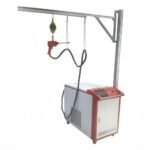
This portable induction brazing machine combines induction heating and a chiller in one unit, offering easy mobility for on-site brazing and welding. With PLC control and recipe management, it’s ready for use in seconds, no complex training needed. Ideal for HVAC, automotive, and toolmaking with energy efficiency, precision, and safety.
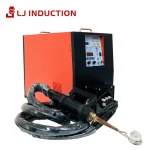
The Handheld Induction Brazing Machine offers a precise, safe, and efficient solution for brazing tasks across industries like HVAC, automotive, and plumbing. Its flameless operation and portability make it ideal for on-site work, ensuring high-quality, clean joints with minimal energy consumption. Ready to enhance your brazing processes? Read more below for detailed specifications and applications.
The automatic induction brazing machine offers precise, automated metal joining using electromagnetic induction, ensuring faster, cleaner, and more efficient brazing for industrial applications.
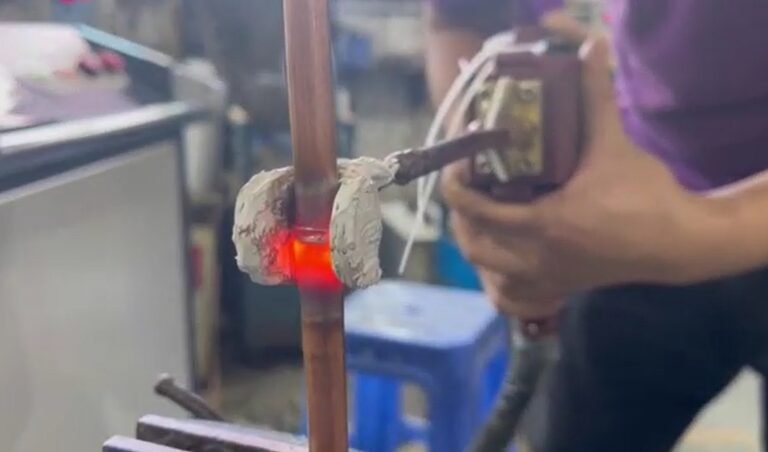
Discover how induction brazing is transforming copper pipe jointing — delivering faster, energy‑efficient, and highly precise brazed connections. With localized heating and superior temperature control, induction brazing outperforms traditional flame methods, producing stronger, cleaner joints with improved safety and consistency across HVAC, plumbing, refrigeration, and industrial applications. Learn why modern manufacturers are choosing induction brazing for reliable, high‑quality copper pipe assemblies.