
Our innovative Shaft Forging Induction Heating System offers unmatched performance and efficiency, making it the ideal choice for manufacturers.
Custom induction heating solutions for solid, hollow, stepped and long shafts before forging, with fast heating, precise temperature control and easy automation integration.
The LJinduction shaft forging induction heating system is designed for shaft parts that require fast, uniform and controllable heating before hot or warm forging.
Designed for shaft forging, not general-purpose heating
Suitable for solid, hollow, stepped and long shafts
Fast and repeatable heating performance
Uniform temperature from surface to core
Lower scale loss than fuel-fired furnaces
Custom coil and automation solutions available
A shaft forging induction heating system is a specialized pre-forging heating solution for solid, hollow, stepped and long shafts, using electromagnetic induction to deliver fast, accurate and repeatable heating before forging.
How it works
Alternating current flows through the induction coil and creates a magnetic field. This field induces eddy currents inside the shaft, generating heat directly in the workpiece for faster and more controllable heating than traditional furnaces.
Suitable forging processes
Shaft hot forging
Warm forging
End heating
Section heating
Scan heating
Single-shot heating
Why induction is ideal for shafts
Long shafts and shafts with complex geometry require better control of heating uniformity, cycle time and local temperature distribution. Induction heating makes it easier to control both local and overall heating, especially for long, stepped or high-value shaft parts.
The Shaft Forging Induction Heating System is designed to provide precise control, ensuring optimal heating for various shaft types.
Utilizing the Shaft Forging Induction Heating System, manufacturers can enhance their production lines with advanced technology.
Suitable shaft applications
Axle shafts
Transmission shafts
Crankshafts
Camshafts
Rotor shafts
Turbine shafts
Drive shafts
Drill shafts
Mandrels
Steering shafts
Suspension shafts
Heavy-duty machinery shafts
Suitable shaft structures
Solid shafts
Hollow shafts
Stepped shafts
Splined shafts
Bar ends
Long cylindrical shafts with shoulders or diameter changes
Suitable materials
Carbon steel
Alloy steel
Stainless steel
Other forgeable ferrous shaft materials
Custom design for your process
Each shaft forging induction heating system is designed according to the actual workpiece material, diameter, length, heating length and production requirement. Different shaft structures and steel grades require different power, frequency and coil design to achieve the right heating result.
With the Shaft Forging Induction Heating System, you will experience faster processing times and reduced energy costs.
| Parameter (CN / EN) | Specification / Value |
|---|---|
| General / 基本信息 | |
| Product Name / 产品名称 | Shaft Forging Induction Heating System |
| Model / 型号 | Custom, based on shaft application and process requirements |
| Applications / 应用类别 | Automotive, aerospace, energy, oil & gas, heavy machinery and general forging |
| Operating Principle / 工作原理 | Electromagnetic induction heating for solid, hollow, stepped and long shafts before forging |
| Key Process Parameters / 关键工艺参数 | |
| Shaft Diameter Range / 适用轴径范围 | Customized according to shaft size and heating requirement |
| Shaft Length Range / 适用轴长度范围 | Customized according to workpiece geometry and handling method |
| Heating Length / 加热长度 | Full-length, end heating, section heating, or scan heating |
| Heating Temperature Range / 加热温度范围 | Determined by material grade and forging process |
| Heating Time / 加热时间 | Depends on shaft material, section size, heating length, and required output |
| Production Rate / 产能 | Designed according to target throughput and line layout |
| Automation Level / 自动化等级 | Manual, semi-automatic, or fully automatic |
| Electrical & Output / 电气与输出 | |
| Input Voltage / 输入电压 | 380V / 415V / 440V, 3-phase, customizable according to local power supply |
| Power Range / 功率范围 | Selected according to shaft diameter, material, heating length, and throughput |
| Frequency Range / 频率范围 | Matched to required heating depth and shaft section size |
| Output Configuration / 输出配置 | Customized according to process demand and system architecture |
| Auto-Tuning / 自动调谐 | Available |
| Control & Monitoring / 控制与监测 | |
| Control Mode / 控制方式 | PLC-based control with recipe management |
| Temperature Control / 温度控制 | Closed-loop control with pyrometer feedback |
| Ramp Rate / 升温斜率 | Adjustable according to application |
| Recipe Storage / 配方存储 | Available for multi-product production |
| Data Logging / 数据记录 | Optional real-time recording for temperature, energy use, and process data |
| Cooling Requirements / 冷却要求 | |
| Cooling Method / 冷却方式 | Water cooling system or chiller |
| Cooling Capacity / 冷却能力 | Selected according to power level and coil configuration |
| Water Quality & Flow / 水质与流量要求 | Specified according to final system design |
| Coils & Handling / 线圈与搬运 | |
| Coil Types / 线圈类型 | Encircling, multi-turn, scan heating, single-shot, multi-zone |
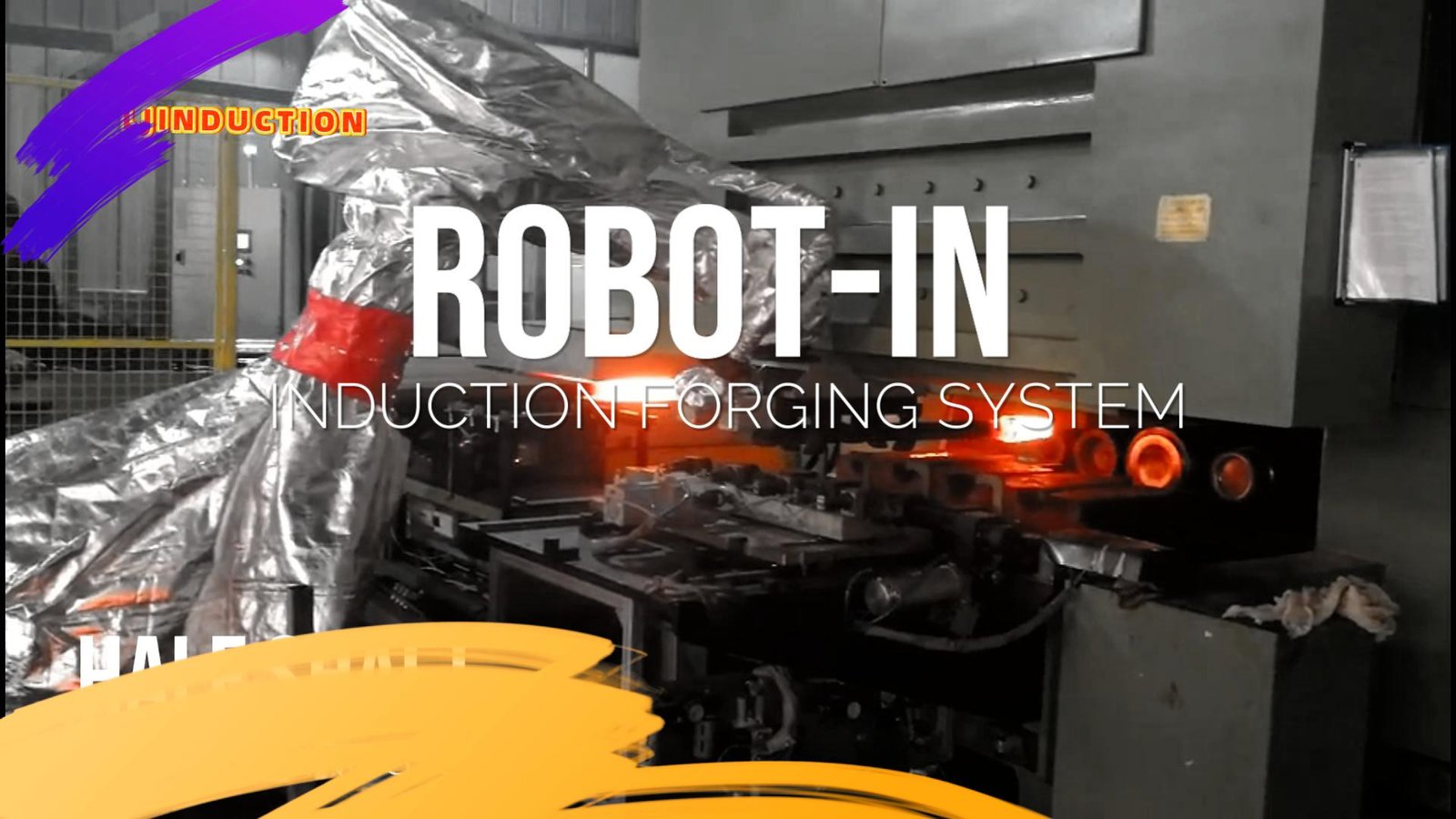
| Handling Options / 搬运方式 | Roller table, shaft rotation, axial movement, automatic loading/unloading, robot or manipulator integration |
| Safety & Protection / 安全与保护 | |
| Electrical Protection / 电气保护 | Overcurrent, overvoltage, overheating, phase loss and cooling interlocks available |
| Safety Functions / 安全功能 | Alarm system and interlocks configured according to project requirements |
Our shaft forging induction heating system is designed to provide:
Fast heating to forging temperature
Good temperature uniformity along the shaft length
Good surface-to-core temperature consistency
Stable heating for both hot forging and warm forging
How uniform heating is achieved
Multi-zone heating design
Optimized frequency selection
Custom coil structure
Shaft rotation during heating
Controlled axial movement
Closed-loop temperature control
Typical heating problems we help solve
How to avoid cold ends
How to reduce temperature gradients on long shafts
How to prevent overheating at shoulders or diameter transitions
How to maintain even heating on stepped shafts
How to reduce surface overheating while ensuring core temperature
Temperature measurement and control
Infrared pyrometer
Thermocouple for trials or process validation
PLC-based recipe control
Real-time temperature feedback
The induction coil is a key part of shaft forging heating performance. It affects:
Heating speed
Temperature uniformity
Energy efficiency
Product quality
Common coil types
Encircling coil
Multi-turn coil
Scan heating coil
Single-shot coil
Multi-zone coil
How coil design is selected
Long shafts: multi-zone or scan heating for better axial uniformity
Stepped shafts: contour-compensated coil design to reduce overheating at diameter changes
Hollow shafts: matched frequency and power according to wall thickness and heating depth
Splined shafts: tailored inductor design to reduce local hot spots
Typical selection logic
Scan heating: for very long shafts or section heating
Single-shot heating: for shorter heated sections or higher takt demand
Multi-zone heating: for better profile control on complex shafts
Our Shaft Forging Induction Heating System is meticulously engineered to maintain consistent temperature profiles for high-quality output.
Standard system components
Induction power supply
Induction coil / inductor
Water cooling system or chiller
PLC control cabinet
Temperature monitoring system
Loading and unloading devices
Roller table or transfer mechanism
Optional configurations
Shaft rotation device
Axial movement mechanism
Multi-station heating
Automatic loading and unloading
Robotic handling
Recipe storage
Energy and temperature data logging
Customized quenching or post-heating station if required
Available line configurations
Manual operation
Semi-automatic line
Fully automatic forging cell integration
Can be integrated with
Forging press
Hammer
Manipulator
Robot
Conveyor
Roller table
Existing shaft handling system
Available automation levels
Manual loading
Semi-automatic transfer
Fully automatic shaft forging line
Single-line or multi-line arrangement
Batch or continuous production setup
Suitable for retrofit projects
Replacing gas or oil-fired furnaces
Retrofitting an existing forging cell
Increasing output without increasing furnace waiting time
Line coordination can include
Press synchronization
Cycle matching
Buffer arrangement
Recipe switching for different shaft sizes
Quality benefits
Better temperature repeatability
Reduced scale formation
Lower risk of decarburization
More consistent forging conditions
Better preparation for downstream heat treatment
Metallurgical value
More uniform microstructure
Better hardness consistency after downstream treatment
Lower risk of local overheating
Reduced distortion risk caused by uneven heating
Typical problems this helps reduce
Cracks from improper heating
Soft spots at transitions
Non-uniform hardness
Thermal damage on shoulders
Excessive oxidation and material loss
Customer-facing results
Better forging consistency
More stable dimensions after forging
Reduced scrap and rework
The Shaft Forging Induction Heating System ensures better forging consistency and stability in dimensions.
Compared with gas-fired or oil-fired furnaces, induction heating offers:
Faster heat-up
Better temperature control
Less oxidation and scale
Less waiting time before forging
Less wasted energy in idle heating
Easier line integration
Better control for shaft geometry changes
Potential production benefits
Potential energy savings
Reduced machining allowance caused by lower scale
Lower scrap risk from better temperature control
Faster production response for different shaft sizes
Automotive and Commercial Vehicles
Axle shafts
Transmission shafts
Crankshafts
Steering shafts
Suspension shafts
High-volume forging lines
Typical needs: cycle time, repeatability, stable heating, easy automation integration.
Aerospace and Energy
Turbine shafts
Rotor shafts
Actuator shafts
Oil tool shafts
Long shafts requiring tight process traceability
Typical needs: traceability, consistency, qualification support, controllable heating profiles.
Heavy Machinery and General Forging
Drive shafts
Rolls
Heavy-duty shafts
Engineering machinery components
General forging shop upgrades
Typical needs: robust equipment, faster heat-up, lower operating cost, easier furnace replacement.
In addition, our Shaft Forging Induction Heating System can be tailored to meet specific industry requirements, enhancing flexibility.
Video for LJinduction axle forging induction heating system with robotic arms:
Explore the latest advancements in our Shaft Forging Induction Heating System for optimal production efficiency.
Different shafts require different power, frequency, coil design, and handling methods
The right solution depends on the heating target, shaft geometry, throughput, and line integration needs
Information we usually need
Shaft material
Shaft outer diameter
Shaft inner diameter if hollow
Shaft total length
Required heating length
Initial temperature
Target forging temperature
Production rate
Existing handling method
Whether automation is required
Whether the shaft has shoulders, splines, or major diameter changes
What we can provide
Heating solution recommendation
Power and frequency proposal
Coil design concept
Line layout suggestion
Automation recommendation
Explore high-efficiency medium-frequency induction heating machines (1–20 kHz) for precise heat treatment, forging, and metal processing.
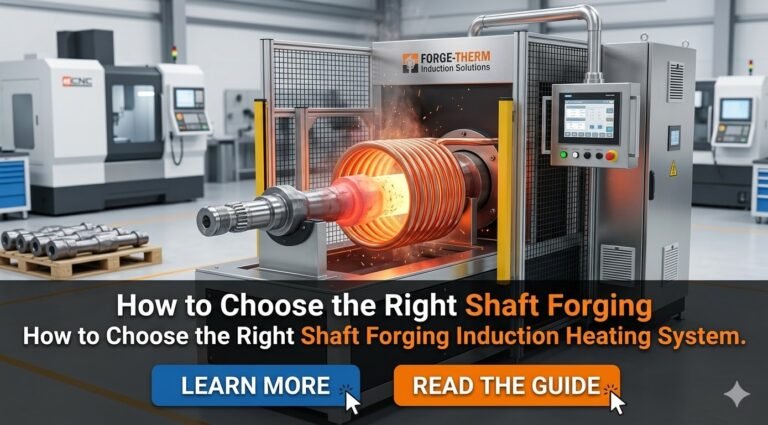
Discover how to choose the right shaft forging induction heating system for your shaft size, material, heating length, output, and automation needs.