


Copper Melting Induction Furnace — high-efficiency MF technology for clean, fast copper/brass/bronze melts with precise temperature control, low oxidation loss, and scalable capacities (10–500 kg). Ideal for foundries, recycling, and labs, it features IGBT power, closed-loop cooling, safety interlocks, and optional HMI/PLC with data logging and SCADA connectivity. Get consistent metallurgy, reduced kWh/ton, and a compact footprint with factory-direct engineering, CE compliance, and global commissioning support.
Copper Melting Induction Furnace technology delivers fast, clean, and precisely controlled melts for copper and copper-alloy production. A Copper Melting Induction Furnace helps foundries, recyclers, and artisans achieve consistent metallurgy with lower energy per tonne.
From the third sentence onward, we’ll reference solutions like a copper induction furnace, induction melting furnace, and medium frequency induction furnace to help you choose the right system for your workflow.
Copper Melting Induction Furnace systems heat the charge via electromagnetic fields, converting electrical energy directly into the melt for high efficiency and low oxidation loss.
In practical terms, a copper induction furnace provides rapid heat-up, tight temperature control, and a cleaner shop environment compared with fuel-fired units.
As a category of induction melting furnace, these systems also scale from lab benches to multi-hundred-kilogramme lines without sacrificing quality.
Medium-frequency induction furnace designs (typically 1–20 kHz) balance penetration depth and stirring to homogenise copper and copper alloys efficiently.
Inside the copper melting furnace, the coil’s alternating magnetic field induces eddy currents that generate heat inside the metal itself, improving thermal uniformity in the middle of the bath.
In practice, an induction melting furnace lets you ramp power quickly at the start and then hold temperature precisely at the end of the cycle.
Medium-frequency induction furnace for copper melting efficiency reduces kWh/tonne and radiant heat at the beginning of each melt.
When the induction melting furnace employs the appropriate fluxes and covers in the middle of the cycle and restricts superheat time, oxidation loss and dross formation decrease.
At the conclusion of each shift, a copper melting furnace also makes compliance and operator safety easier with interlocks, E-stops, and ventilation tie-ins.
Models & Key Specifications
| Model | Copper Capacity (kg) | Rated Power (kW) | Frequency (kHz) | Tilt Type | Cooling | Typical Use |
|---|---|---|---|---|---|---|
| LJ-10 | 10 | 15–25 | 10–20 | Manual | Closed-loop chiller | Lab/teaching/samples |
| LJ-30 | 30 | 35–60 | 8–15 | Motorized | Closed-loop chiller | Small-batch casting, R&D |
| LJ-50 | 50 | 60–90 | 6–15 | Motorized | Chiller / cooling tower | Pilot line, jobbing shop |
| LJ-100 | 100 | 100–160 | 4–10 | Motorized/Hydraulic | Chiller / cooling tower | Brass/bronze standard line |
| LJ-200 | 200 | 160–250 | 3–8 | Hydraulic | Tower + plate exchanger | Recycling & alloy shops |
| LJ-300 | 300 | 250–350 | 2–6 | Hydraulic | Tower + plate exchanger | Continuous pour / mid-volume |
| LJ-500 | 500 | 350–500 | 1–4 | Hydraulic | Tower + heat recovery | High-volume melting |
Note: Power/frequency shown are medium-frequency (1–20 kHz) selection ranges. Final configuration depends on cycle targets, utilities, and process. Dual-station, parallel power, and channel-furnace options available.
Electrical & Efficiency
| Item | Specification |
|---|---|
| Input Power | Three-phase 380–480 V, 50/60 Hz (other voltages customizable) |
| Topology | IGBT full-bridge MF power; soft start; over-voltage/over-current/over-temp protections |
| Power Factor | ≥0.95 (typ.) |
| Electrical Efficiency | System efficiency ≥97% (typical conditions) |
| Control Accuracy | Power step/slope control; digital PID temperature control (IR/thermocouple supported) |
Melt Bath & Refractories
| Item | Specification |
|---|---|
| Coil/Yoke | Copper-tube coil with magnetic yoke; quick-disconnect bus; temp/flow interlocks |
| Crucible/Lining | Graphite/silica (quartz) packages for copper and Cu-alloys; bake-out & life guidance provided |
| Stirring & Uniformity | Electromagnetic stirring enhances temperature/composition homogeneity and reduces oxides |
Cooling Requirements
| Item | Specification |
|---|---|
| Cooling Scheme | Closed-loop chiller or cooling tower + plate heat exchanger |
| Inlet Temperature | Recommended 20–35 °C |
| Recommended ΔT | ≤8–10 °C |
| Water Quality | Softened/DI water; conductivity & hardness per chiller vendor spec |
| Interlocks | Inlet/outlet temperature, flow, ΔP monitoring with trip interlocks |
Correct busbar routeing, earthing/ground-fault monitoring, and water quality checks at the start of commissioning are necessary for coreless induction furnace installations.
Heat exchanger descaling, flow verification, and lining checks during scheduled maintenance are all part of routine care for a channel induction furnace.
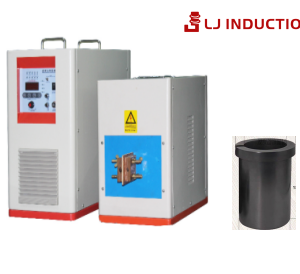
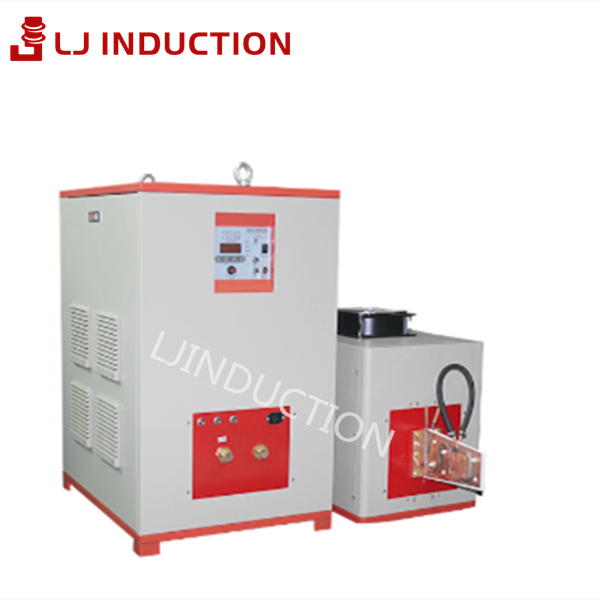
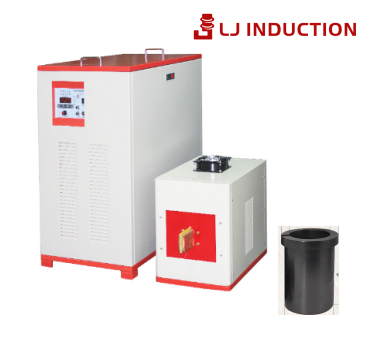

Discover the benefits of induction copper melting furnaces. Learn about performance, sizes, and applications for efficient copper, brass, and bronze melting (5–500 kg).